
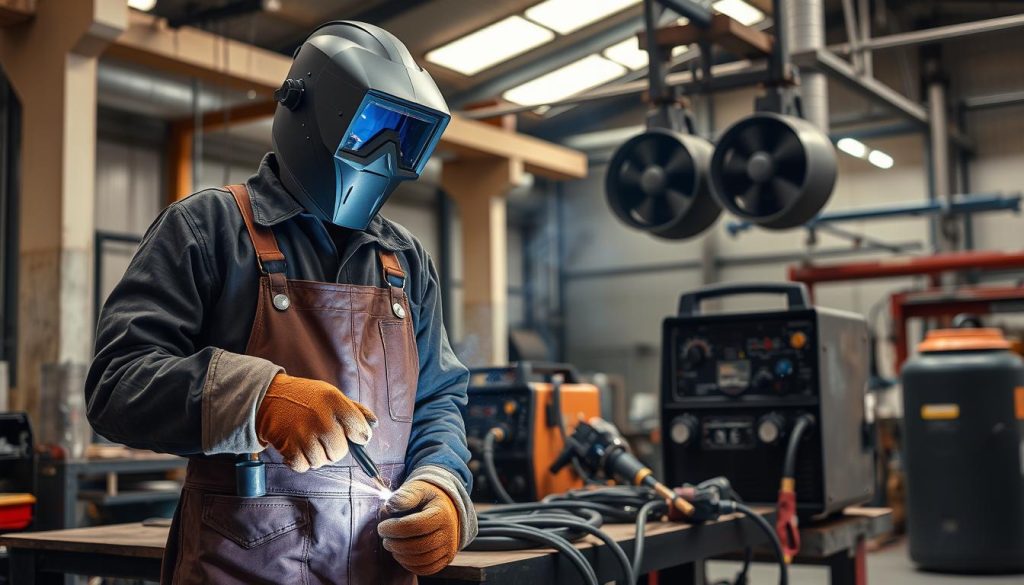
Did you know welding injuries happen more often than most people realize? Working with sparks and molten metal isn’t just about skill—it’s about staying alert. Every year, preventable accidents occur because basic safety protocols and precautions get overlooked in the working environment.
Heat and electricity create serious risks. Burns, shocks, and eye damage are common hazards. But invisible threats like fumes and gases, along with UV radiation, can be just as dangerous. A single mistake could lead to long-term health issues or worse.
Good news: most accidents are avoidable. Simple steps like checking equipment and using comprehensive safety practices make all the difference. It’s not just about rules—it’s about protecting yourself and your team from intense heat and harmful materials.
Think of safety habits like muscle memory. The more you practice them, the more natural they become. This guide breaks down everything from choosing the right PPE gear to setting up workspace airflow and ventilation. Real-life examples show why each step matters.
Key Takeaways
- Burns and eye injuries rank among the most common welding-related accidents
- Toxic fumes require proper ventilation systems or respirators
- Pre-work checks prevent 80% of electrical shock incidents
- Auto-darkening helmets protect against UV radiation exposure
- Regular training updates keep safety knowledge fresh and relevant
Understanding Arc Welding Risks
What’s more dangerous in Arc welding —the sparks you see or the threats you don’t? Welding creates hidden risks that demand attention. Let’s break down two major categories of hazards every worker should recognize.
Invisible Threats: Airborne Dangers
That smoky haze isn’t just annoying—it’s packed with metal particles and toxic fumes gases. Breathing in zinc or chromium oxides can trigger nausea within minutes. Ever felt dizzy after welding? That’s fume exposure at work.
UV radiation acts like silent sandpaper on your eyes. Without proper ppe, you might develop welder’s flash—a sunburn-like eye injury. Symptoms often hit hours later, making prevention crucial.
Visible Dangers: Heat and Electricity
Molten metal splatters at 2,500°F—hot enough to melt through shoes. But burns aren’t the only shock risk. Did you know welding circuits carry 200+ volts? That’s 10 times household current.
| Hazard | Immediate Effect | Long-Term Risk |
|---|---|---|
| Metal Fumes | Headaches | Lung Damage |
| UV Radiation | Eye Pain | Vision Loss |
| Electric Current | Muscle Spasms | Cardiac Arrest |
Spotting warning signs early saves lives. If your throat burns or vision blurs, stop working immediately. Store electrodes properly, check cables for damage, and always let equipment cool before handling.
Ensuring Proper Ventilation and Safety Measures for Arc Welding
Ever wonder why some welders never get headaches? The secret starts with airflow. Moving fresh air through your workspace does more than cool you down—it stops toxic particles from settling in your lungs.
Smart Exhaust Solutions
Portable fume extractors work like vacuum cleaners for metal smoke. Position them within 12 inches of your arc—any farther, and they’ll miss half the fumes. I once saw a workshop cut fume exposure by 70% just by angling their hoods downward.
Indoor vs Outdoor Airflow
Outdoor welding has its own rules. That gentle breeze? It might blow fumes right into your face. Try placing fans behind you to create a “clean air tunnel.” Indoors, use overhead exhaust systems paired with open windows. Remember: air should flow from your back to your front.
Keeping Air Safe
How clean is your workspace air? Try this test: weld for 10 minutes, then check if you can see across the room. If not, your ventilation’s failing. Simple tools like air quality monitors cost less than a good helmet and last for years.
- Replace exhaust filters every 80 work hours
- Clean fan blades monthly to maintain airflow
- Mark “fresh air zones” with colored floor tape
One shop I visited used a $20 smoke tube to track airflow patterns. They discovered their $5,000 system worked best when workers stood 3 feet left of the vent—proof that small tweaks make big differences.
Implementing Essential Personal Protective Equipment
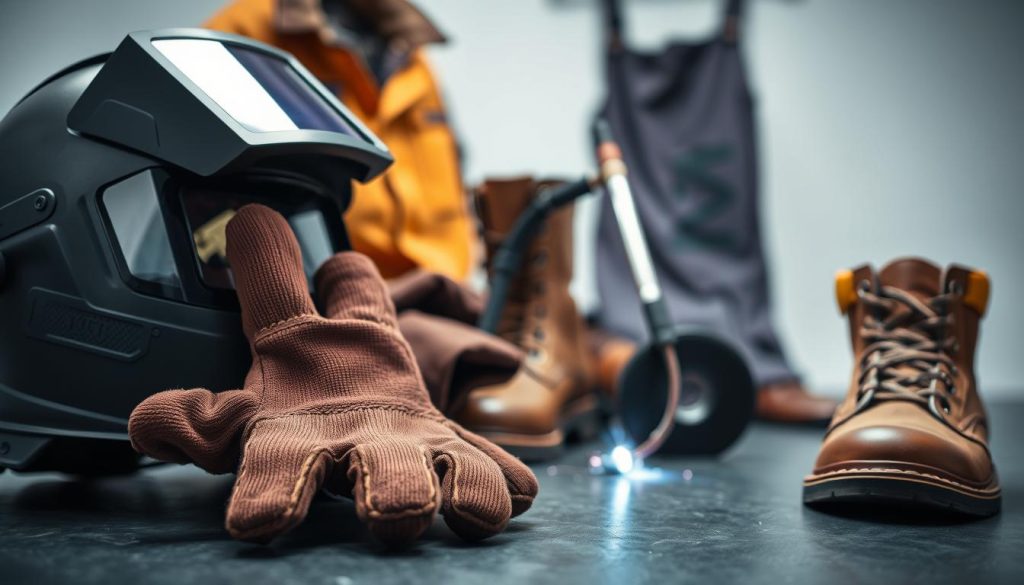
How many layers of protection do you wear while welding? Your gear acts like a superhero suit—each piece battles specific dangers. From head to toe, every item matters when sparks fly and metals melt.
Armor for Your Head and Lungs
That welding helmet does more than block bright light. Auto-darkening lenses adjust faster than a blink—usually in 1/20,000th of a second. Ever tried nodding your head to flip a helmet down? Newer models do it automatically when the arc starts, enhancing your overall safety.
Safety glasses under your helmet catch what the visor misses. Grinding metal sends debris sideways—your regular glasses won’t stop that. Pair them with a respirator rated for metal fumes and gases, and you’ve got a full-face defense system, making your ppe more effective.
| Gear | Protects Against | Key Feature |
|---|---|---|
| Auto-Darkening Helmet | UV/IR Radiation | Adjustable Shade 8-13 |
| Side-Shield Glasses | Flying Debris | Wrap-Around Design |
| N95 Respirator | Metal Fumes | Double Strap Seal |
Your Body’s Second Skin
Flame-resistant jackets aren’t just thick—they’re engineered to char instead of burn. I once saw a welder’s sleeve catch a spark. The materials blackened but didn’t ignite, saving his arm from third-degree burns.
Welding gloves need flexibility and heat resistance. Goat leather offers both, while Kevlar stitching prevents seams from melting. Too stiff? Try split-grain options—they break in like baseball mitts, ensuring comfort and safety.
Steel-toe boots with metatarsal guards protect more than your toes. Hot metal chunks can bounce—high tops keep them out of your footwear. Remember: synthetic materials melt. Stick to all-leather designs for maximum safety.
Managing Fire and Electrical Hazards in Your Welding Area
Sparks from welding can fly farther than a baseball pitch. One stray ember could ignite cardboard boxes across the room or hidden dust pockets. Balancing heat sources and energy flows requires smart planning.
Preventing Fires with Proper Clearance and Extinguishers
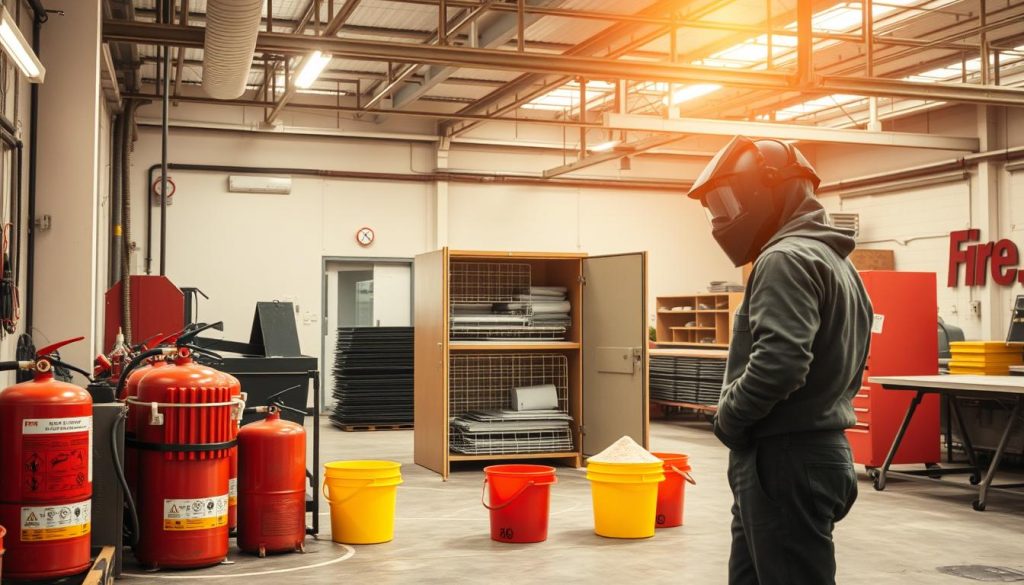
That 35-foot rule? It’s based on real spark trajectories. I watched a metal fragment bounce 40 feet during a demo—still glowing orange. Clear your zone daily: check ceilings for cobwebs and floors for oil stains.
Class ABC fire extinguishers handle three threat types. Mount them on bright red brackets near exits. Ever practiced the PASS method? Pull pin, Aim low, Squeeze handle, Sweep base. Do drills monthly—muscle memory saves seconds. Also, ensure your workspace is well-ventilated to minimize exposure to harmful fumes gases that can accumulate during welding operations.
| Hazard | Solution | Check Frequency |
|---|---|---|
| Flying sparks | Metal screens | Before each job |
| Molten splatter | Fire-resistant curtains | Weekly |
| Electrical shorts | Insulated gloves | Daily |
Electrical Safety: Inspections and Grounding Techniques
A cracked cable caused my neighbor’s welder to arc unexpectedly. Now he checks connections like checking his phone—first thing every morning. Look for frayed wires and loose plugs.
Grounding isn’t optional. Clip your workpiece directly to a clean metal surface. Rust acts like insulation—scrub contact points with a wire brush. Wet floors? Postpone work until everything’s bone-dry.
Last tip: turn off power before adjusting anything. That quick “I’ll just fix this” moment? It’s how most shocks happen. Better to wait 30 seconds than risk 30 days in recovery.
Optimizing Your Welding Workspace and Emergency Readiness
Your welding area works like a silent partner—when organized well, it prevents accidents before they happen. Think of it as setting up a stage where every tool has its place and dangers stay contained.
One of the key preparation steps for arc welding is ensuring proper ventilation, as this helps protect welders from harmful fumes while maintaining a safe and comfortable working environment.
Organizing the Welding Area for Maximum Safety
Clutter turns tools into trip hazards. I once saw a grinder left on the floor cause a nasty fall. Now I use shadow boards—cutout shapes show exactly where each tool belongs.
Keep walkways wider than your shoulders. Store flammables in red metal cabinets at least 20 feet from sparks. Use magnetic trays for screws—they won’t spill if knocked over. Regularly inspect your equipment to ensure it’s functioning correctly and safely.
Establishing Clear Safety Zones and Warning Systems
Yellow floor tape creates visual boundaries. Anyone crossing the line needs PPE. For high-risk spots, hang blinking LED signs that activate when welding starts.
Hot metal stays dangerous for hours. After finishing a weld, place insulated warning cones around cooling pieces. One shop uses glow-in-the-dark markers—they’re visible even if power fails.
Preparing for Emergency Situations and Incident Response
Practice escaping your workspace blindfolded. Smoke reduces visibility fast. Keep exits clear—I measure weekly with a folded 36-inch yardstick.
Post emergency numbers by every phone. Include the exact workspace address—panicked people forget details. Store burn kits at eye level, not buried in cabinets.
| Emergency Tool | Location | Check Frequency |
|---|---|---|
| Fire Blanket | Wall Mount Near Exit | Monthly |
| Eye Wash Station | 10 Seconds From Work Area | Weekly |
| First Aid Kit | Central Marked Cabinet | After Each Use |
Wait 30 minutes before touching recently welded metal. Use infrared thermeters—they’re cheaper than ER co-pays. Remember: your environment matters as much as your skills.
Advanced Safety Practices and Maintenance
What separates a good welder from a great one? It’s not just skill—it’s how they maintain their gear and update their knowledge. Staying safe requires more than following basic rules; it demands constant attention to detail and a commitment to improvement.
Daily Checks Save Tomorrow’s Headaches
Imagine finding a frayed cable before it sparks. That’s the power of routine inspections. Start with your welding machine: look for cracked insulation or loose terminals. Check gloves for thin spots—even a pinhole can let heat through.
Create a 5-minute checklist:
- Test ground connections
- Inspect helmet lenses
- Scan work areas for tripping hazards
Ensuring Proper Ventilation and Safety Measures for Arc Welding
| Inspection Item | Frequency | Why It Matters |
|---|---|---|
| Power Cables | Daily | Prevents electrical faults |
| Respirator Seals | Weekly | Ensures fume protection |
| Fire Extinguishers | Monthly | Guarantees emergency readiness |
Learning Never Stops in the Workshop
New welding tools hit the market every year. Last month, I tried a plasma cutter with built-in airflow sensors—game changer. But without training, even advanced systems become risks.
Part of maintaining a safe work environment includes conducting pre-weld inspections and checks for arc welding, which help identify potential hazards and ensure proper ventilation systems are in place before starting the job.
Hold monthly “safety huddles” to:
- Review near-miss incidents
- Demo updated protocols
- Share repair tips for damaged gear
Remember: accountability isn’t about blame. It’s about creating habits. When everyone speaks up about loose bolts or outdated methods, the whole team wins.
Conclusion
True professionals know safety isn’t just gear—it’s a mindset. One veteran welder I met checks his gloves and boots daily like clockwork. Why? Because protection starts before the arc lights up. Those heat-resistant boots? They’ve stopped more molten sparks than you’d guess.
Your eyes deserve armor-grade care—auto-darkening lenses and side shields block what your helmet misses. Ever forgotten fire blankets nearby? I’ve seen them smother flare-ups faster than any extinguisher. Pair these with smart exhaust setups, and you’re guarding both lungs and environment.
Good habits outlive any single job. Store materials properly, stay alert to electrical risks, and refresh your knowledge often. Want a cheat sheet? Bookmark this detailed welding safety protocol. Remember: every precaution you take today writes tomorrow’s success story—with fewer close calls and more confidence at the torch.
FAQ
What are the most common risks in arc welding?
Toxic fumes, UV radiation, sparks, and electrical shocks top the list. Without a welding helmet or safety glasses, your eyes face damage. Always check for flammable materials nearby—molten metal can travel farther than you think!
How do I keep fumes from building up in my workspace?
Use exhaust systems like fume extractors from brands like Lincoln Electric. Open doors/windows outdoors, and position fans to push fumes away. Test air quality monthly with tools like 3M’s Particulate Monitor.
What gear is non-negotiable for arc welding?
A auto-darkening helmet (try Miller Digital Elite), flame-resistant gloves, and boots like Tillman 1555. Don’t skip respirators—Honeywell’s North 7700 blocks 99% of toxic gases. Oh, and cotton clothes? They melt. Stick to leather or FR fabrics. Ensure all your welding equipment is in top condition to maintain safety.
How can I prevent fires when welding indoors?
Clear a 35-foot zone of paper, gas cans, or wood. Keep a Class ABC fire extinguisher (Kidde Pro 210) within reach. Lay down welding blankets—Chicago Protective Gear’s fiberglass ones resist sparks better than tarps.
What’s the safest way to set up a welding area?
Mark safety zones with yellow tape and warning signs. Store tools in labeled racks—no tripping hazards! Use bright LED lights (Bayco SL-8902) so you spot risks fast. Got a first-aid kit? Add burn gel and eye wash stations.
How often should I inspect my welding equipment?
Check cables, ground clamps, and torches before every job. Replace cracked hoses or frayed wires immediately. Schedule professional inspections yearly—companies like ESAB offer safety audits. Remember, a faulty machine can turn a routine weld into an emergency.
Do I need a respirator if I’m welding outside?
Yes! Wind shifts can blow fumes back at you. Pair a 3M SecureClick respirator with P100 filters. Still, avoid working downwind from others. Even outdoors, ozone and metal vapors linger—why risk your lungs?
What’s the biggest mistake welders make with electrical safety?
Skipping the ground clamp. Always attach it directly to clean, bare metal—paint or rust blocks the connection. Use a Miller ground clamp with heavy-duty springs. And never weld in wet boots—120 volts can still knock you flat.
How do I prepare for a welding emergency?
Train your team on emergency protocols—like using eye wash stations for flash burns. Post exit routes and assign a “safety buddy.” Keep a charged phone nearby, and know the address to tell 911. Practice matters: Run monthly drills for fire or shock scenarios.