
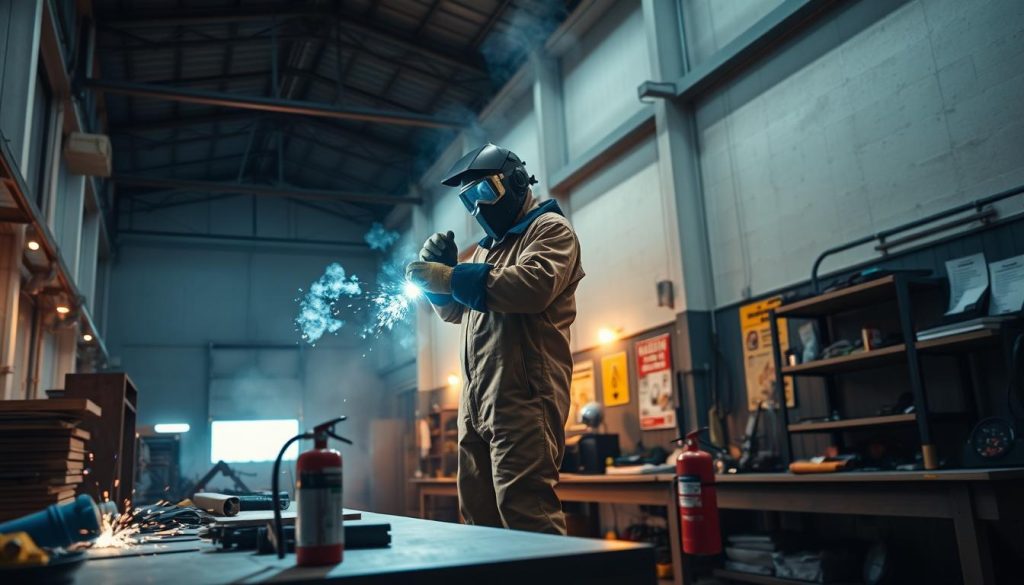
This process uses electricity to melt and join metals. It creates sparks and spatter that can travel far. That’s why careful planning is not just a good idea—it’s essential. Have you ever wondered what separates a safe operation from a dangerous one?
This guide will walk you through the top methods for staying safe. We cover everything from your protective gear to setting up your work area. Whether you’re new or have years of experience, you’ll find practical knowledge to use right away.
From construction sites to auto shops, this type of work is vital. The hazards are real, but they are manageable with the right approach. For expert help, the team at Xpress Mobile Welding Phoenix prioritizes welding health and safety precautions in every project.
Key Takeaways
- Arc welding creates extreme heat and sparks, presenting a significant fire risk.
- Approximately 1.5 million U.S. workers are exposed to welding hazards annually.
- Proper planning and protocols are essential for protecting people and property.
- Safety measures range from personal protective equipment to workspace preparation.
- These risks are manageable with consistent application of correct procedures.
- Professional services, like those in Gilbert, AZ, make safety a top priority.
Introduction to Arc Welding and Fire Safety
Metal joining through electricity creates incredible heat, but also serious fire concerns. This welding process uses powerful electrical currents to melt and fuse metals together. The intense heat generated can reach thousands of degrees.
Understanding the Fire Risks in Arc Welding
The arc welding method produces flying sparks that can travel several feet. Molten metal droplets pose real danger to nearby flammable materials. Even after work stops, hot metal remains hazardous.
Certain coated metals release toxic fumes when heated. This creates combined health and fire risk situations. About 1.5 million American workers face these welding hazards annually.
The Importance of Safety Protocols and Proper Training
Proper training transforms a risky activity into a controlled process. A skilled welder identifies hazards before they become emergencies. They understand equipment limits and respond quickly when needed.
Welding safety protocols protect worker health safety and prevent accidents. These aren’t just rules—they’re proven methods developed over decades. Establishing a safety-first culture means every person takes responsibility.
When was the last time you reviewed your welding safety procedures? Regular updates ensure ongoing protection against fire risk.
Best Practices For Fire Safety in Arc Welding
Your welding setup begins with equipment that meets strict industry standards. Quality gear provides reliable performance while reducing hazards.
Selecting and Maintaining the Right Welding Equipment
Choose welding equipment with proper safety certifications like NEMA approval. This guarantees the gear meets rigorous standards.
Proper installation matters as much as the equipment itself. Secure electrical connections and adequate grounding prevent accidents.
Maintenance is an ongoing responsibility. Regularly inspect cables for fraying and check connections for looseness.
Never push equipment beyond its duty cycle. Overheating can damage components and start fires.
Implementing Personal Protective Equipment (PPE) Effectively
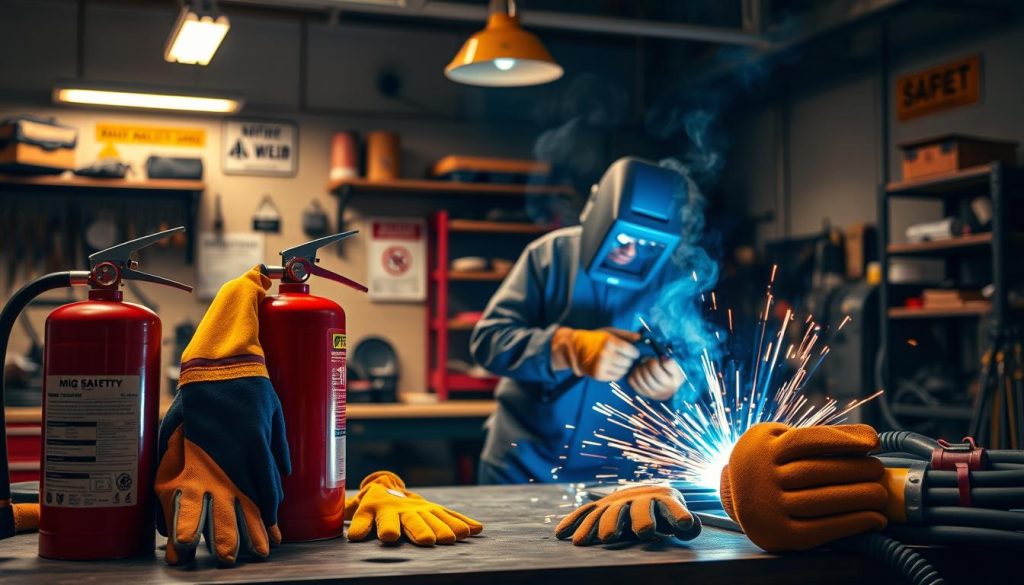
Personal protective equipment forms your last line of defense. Using quality PPE correctly every time is essential for survival.
Start with a welding helmet having the correct filter shade. This protects your eyes from intense UV and infrared radiation.
Wear safety glasses under your helmet for backup eye protection. Even brief exposure to welding light can injure unprotected eyes.
Flame-resistant jackets, heavy-duty gloves, and steel-toed boots work together as a system. They shield your body from sparks and molten metal.
Cover all exposed skin to prevent painful burns. Avoid synthetic materials that can melt onto skin.
Would you skip wearing your helmet just once to save thirty seconds? Shortcuts with personal protective equipment can have life-changing consequences.
Implementing Fire Prevention Strategies in Arc Welding
Before the first spark flies, a thorough check of your surroundings is your best defense. True safety starts with smart preparation. This means looking at your entire area with a critical eye, which means should implementing fire watch procedures during arc welding.
Workplace Preparation and Ventilation Techniques
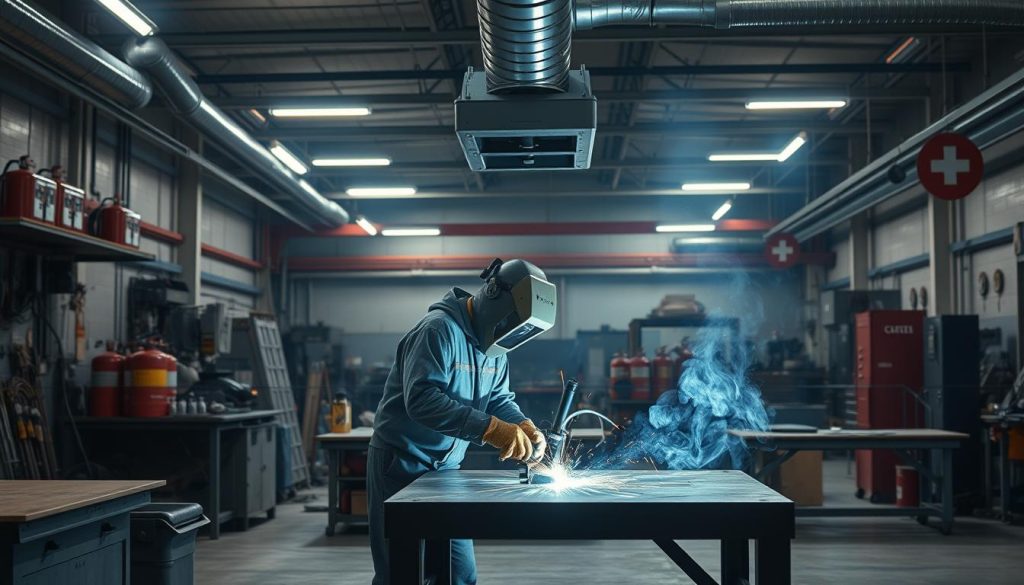
Clean air is a life-saver, not just a comfort. The welding process creates dangerous fumes from metals and coatings. These fire-resistant materials for arc welding environments can release toxic gas when heated.
Outdoors, natural air flow often works. Inside, you need stronger measures. Use local exhaust vents or portable extractors. They pull contaminated air away before you breathe it.
This is especially vital for metals like zinc or cadmium. Their fumes are particularly harmful. Good ventilation is a non-negotiable precaution.
Fireproofing the Work Area and Ensuring Electrical Safety
Your work space must resist ignition. Concrete floors and fire-resistant shields are ideal. If you can’t change the structure, move combustibles far away.
Sparks and hot metal can travel over 35 feet. They can easily ignite paper, wood, or liquids. Always keep a fire extinguisher close by.
Best Practices For Fire Safety in Arc Welding
Electrical precautions are just as critical. The arc uses high voltage. Inspect cables for damage before each use. Never work in damp conditions or stand in water.
After welding, dangers remain. Slag can pop off, and metal stays hot long after it glows. Use insulated gloves for handling. Have you ever been tempted to skip the area inspection because you’re in a hurry?
Conclusion
The final, most important step in any welding job is ensuring a safe shutdown. Following proven safety tips consistently turns a risky activity into a controlled process. It’s about more than rules—it’s the difference between a normal day and a life-changing accident.
Always read your equipment manual. Those instructions contain vital protection details. Have a fire extinguisher and first aid kit ready. Is your workspace prepared for an emergency?
For professional welding services that prioritize these precautions, contact Xpress Mobile Welding Phoenix. Every welder on their team is trained in top arc welding safety practices standards.
You can find them at 922 N Colorado St Gilbert, AZ 85233. Call (623) 263-0277 for projects requiring expertise and a safety-first approach.
FAQ
What is the biggest fire risk when arc welding?
The biggest risk comes from sparks and hot metal. These can travel up to 35 feet and easily ignite flammable materials. Think about wood, paper, or flammable liquids nearby. That’s why clearing your work area is the first and most important step.
What personal protective equipment is essential for fire safety?
You need the right gear to protect yourself from burns and sparks. This includes flame-resistant clothing, like a heavy-duty welding jacket and pants. Don’t forget heavy-duty welding gloves and sturdy leather boots. Your helmet and safety glasses protect your eyes from intense light and flying debris.
How should I prepare my work area to prevent a fire?
Start with a clean, clear space. Move all flammable materials far away from your welding arc. Use a fire-resistant welding blanket or screen to protect walls and floors. Always have a fire extinguisher ready and know how to use it. Good ventilation is also key to clearing out dangerous fumes.
Why is equipment maintenance so important for safety?
Well-maintained equipment is safe equipment. Frayed cables, loose connections, or damaged torches can cause electrical shorts or sparks. These problems can start a fire. A quick check of your cables, torch, and ground clamp before you start welding can prevent a major accident.
What should I do immediately after finishing a weld?
Your work isn’t done when the arc stops. The metal and the slag are extremely hot and can start a fire long after you finish. Let the materials cool down completely. Use a designated container for hot slag. Never leave a hot work piece unattended. It’s a simple habit that prevents big problems.