
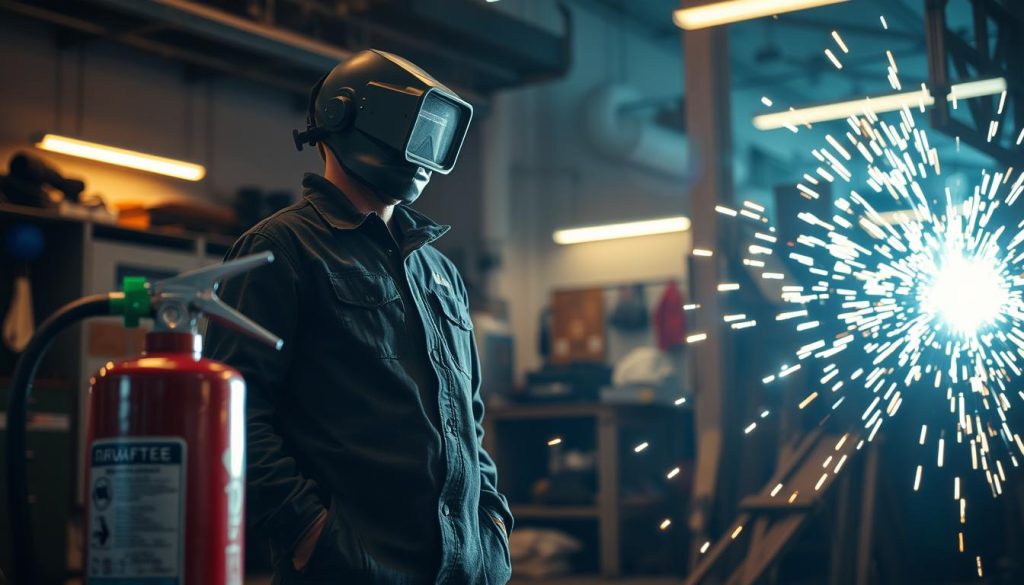
A single spark can change everything. When you’re focused on a precise weld, it’s easy to forget about the risks flying around you. This guide is here to change that. We’ll show you how to protect your team and your property.
Why is this so critical? The intense heat from arc welding creates more than just a bright light. It produces sparks and hot slag that can travel surprisingly far. These embers can land on flammable materials and smolder quietly for hours. Imagine finishing a job, packing up, and leaving, only to have a blaze start later. It’s a scary thought, right?
That’s where a dedicated safety protocol comes in. We will walk you through setting up a safe zone. You’ll learn how long to monitor the area after the work is done. These steps are vital for any job site, from a large construction project to a mobile repair.
This information is brought to you by Xpress Mobile Welding Phoenix. We are located at 922 N Colorado St Gilbert, AZ 85233. For professional welding services and safety consultation, call us at (623) 263-0277.
Key Takeaways
- A dedicated safety watch is essential because sparks from welding can travel far and start fires hours later.
- Proper setup of the work area is the first critical step in preventing accidents.
- Monitoring must continue for a specific time after all hot work has stopped.
- These safety measures protect both people and property on any job site.
- Following established guidelines from organizations like OSHA is a key part of the process.
- Developing safe habits is about more than rules; it’s about preventing real damage.
Introduction to Fire Watch and Arc Welding Safety
Why assign someone to just stand and watch? Because in welding, what you don’t see can truly hurt you. This dedicated role is your safety net. It’s a required part of any hot work project.
Purpose and Importance of Fire Watch
The National Fire Protection Association (NFPA) defines this duty clearly. A fire watch means having trained personnel focused solely on safety. Their job is to look for emergencies. They prevent fires before they start. They also put out small blazes and alert everyone if danger appears.
This protection is vital. Imagine a spark hiding in a wall, smoldering for an hour after you’ve left. Scary, right? A proper watch stops that. It safeguards your team, your site, and the surrounding area. It’s not just a rule—it’s peace of mind.
Overview of Arc Welding Hazards
The risks are real and often invisible. The arc itself creates extreme heat, near 6,000 degrees Fahrenheit. This heat produces sparks that can fly over 35 feet. Molten metal can drip into cracks you didn’t know were there.
Even the leftover slag stays hot long after the work stops. These hazards demand constant vigilance. That’s why the person on watch can have no other jobs. Their full attention must be on the area. This focused monitoring is your best defense against a sudden emergency.
Understanding Hot Work and Combustible Hazards
Before the first spark even flies, the most critical step in any hot work project is understanding your environment. This means knowing exactly what can burn. We call these items combustible materials.
So, what is hot work? It’s any job that creates sparks, an open flame, or intense heat. This includes grinding, brazing, and using cutting torches. These processes all share a common trait: they can easily start a fire if proper care isn’t taken.
Identifying Combustible Materials
Combustible materials are anything that can catch fire. Think of wood, paper, cloth, and plastics. But the hazards can be sneakier. Can you spot them all?
Dust is a major concern. Paper dust or wood shavings on the floor are extremely dangerous. They have a huge surface area, making ignition quick and easy. A spark can land and smolder unseen.
You must look everywhere for these materials. Check above at ceiling tiles. Look below for gaps in the floor. Scan walls and even spaces next door. Metal conducts heat, so a wall can transfer danger.
This is why the 35-foot rule is so important. Sparks from hot work can travel that far. Clearing this area of all combustible materials is your first line of defense against these hazards.
Implementing Fire Watch Procedures During Arc Welding
Who is your first line of defense when the torch is lit? It’s the person assigned to the safety watch. This individual is not the person doing the welding. Their only job is to protect the area.
This role requires full attention. Imagine trying to weld and look for sparks at the same time. It’s nearly impossible. That’s why the safety observer can have no other duties. Their eyes must constantly scan for danger.
This person needs real authority. If they see an unsafe condition, they must be able to stop the work immediately. There’s no time for debate. Seconds can prevent a major incident.
Positioning is everything. The observer must see the immediate work zone and any space within 35 feet. Sparks can travel far. Is there a wall nearby? Heat can travel through metal. You may need another watchperson on the other side.
What does this crucial role involve? Their duties are focused and clear.
- Constant vigilance: This means watching without distraction, not just glancing around occasionally.
- Emergency readiness: They must know the exact location of fire extinguishers and alarms.
- Complex site awareness: On large sites or multiple floors, one observer might not be enough. You need eyes on every risk area.
A well-executed safety watch is a quiet but powerful shield. It turns rules into real-world protection for everyone on site.
Setting Up a Fire-Safe Hot Work Area
Creating a secure zone is your first move before any hot work begins. Think of it like preparing a kitchen before cooking. You clear the counters and have your tools ready. This preparation makes everything safer and smoother.
Your initial step is a thorough walk-around. Scan the entire area within 35 feet. Look for anything that could catch fire. Wood, paper, dust piles – they all need attention. Can you spot all the risks?
Pre-Work Area Hazard Assessment
This assessment is like a safety detective’s job. You’re searching for hidden dangers. Check floors, walls, and even ceilings. Small cracks can be pathways for sparks.
Always ask: can this work be done in a safer location? A designated shop with permanent protection is ideal. If not, your on-site preparation becomes critical.
Fire-Retardant Measures and Shields
When you cannot move combustible materials, you must protect them. Fire-retardant covers are your best friend here. They resist ignition from stray sparks.
Metal shields and welding curtains create strong barriers. They stop heat and sparks effectively. Proper placement is key to their success.
For comprehensive fire prevention strategies, these measures form your essential foundation.
| Safety Method | Best Use Case | Effectiveness | Implementation Time |
|---|---|---|---|
| Relocating Materials | When items are movable | Eliminates hazard completely | 5-15 minutes |
| Fire-Retardant Covers | Fixed or heavy items | High spark resistance | 2-5 minutes |
| Metal Shields | High-spark operations | Excellent heat reflection | 3-7 minutes |
| Floor Sweeping | All work areas | Prevents dust ignition | 2-4 minutes |
Remember to sweep floors thoroughly within that 35-foot circle. Even tiny debris can ignite. These steps might seem simple, but they prevent most accidents.
Each measure adds a layer of safety. Together, they create that secure zone where hot work can proceed confidently. Your preparation today prevents emergencies tomorrow.
Inspection and Maintenance of Welding Equipment
A quick, five-minute inspection can prevent hours of trouble and danger. Your gear is your first line of defense. A simple daily check keeps you safe from shocks and unexpected flares.
Make this a habit before every shift. Look over all your tools carefully. This routine finds small problems before they become big emergencies.
Arc Welding Equipment Inspection
This check focuses on electrical safety. Your cables are like the veins of your operation. They must be in perfect condition.
Look for cuts or worn spots on the insulation. Feel the connections. Are they tight? A loose connection creates heat. That heat can start a fire inside the cable itself.
Your electrode holder and ground clamp are critical. Keep them clean and secure. Position them to avoid accidental contact. A good ground is your best friend for a safe operation.
Gas Welding Equipment Checks
Here, the dangers are different. You are working with fuel and oxygen. A tiny leak can have big consequences.
Check your torch first. Are the valves and connections tight? Use a friction lighter to start it, never a match. Listen for any hissing sounds that suggest a leak.
Your hoses need attention, too. Are they color-coded correctly? Look for cracks or signs of wear. Your pressure gauges must be clear and marked properly. Remember, oil and oxygen are a dangerous mix.
Finally, check your cylinders. Are they secured upright? Are the protective caps on when not in use? A damaged cylinder is a serious hazard. Never use equipment that seems faulty. Tag it and report it immediately.
Roles and Responsibilities of Fire Watch Personnel
The person on fire watch has a job that is both simple and incredibly complex. Their single focus is safety, but that focus must cover a wide area. They are the eyes and ears for dangers the welder cannot see.
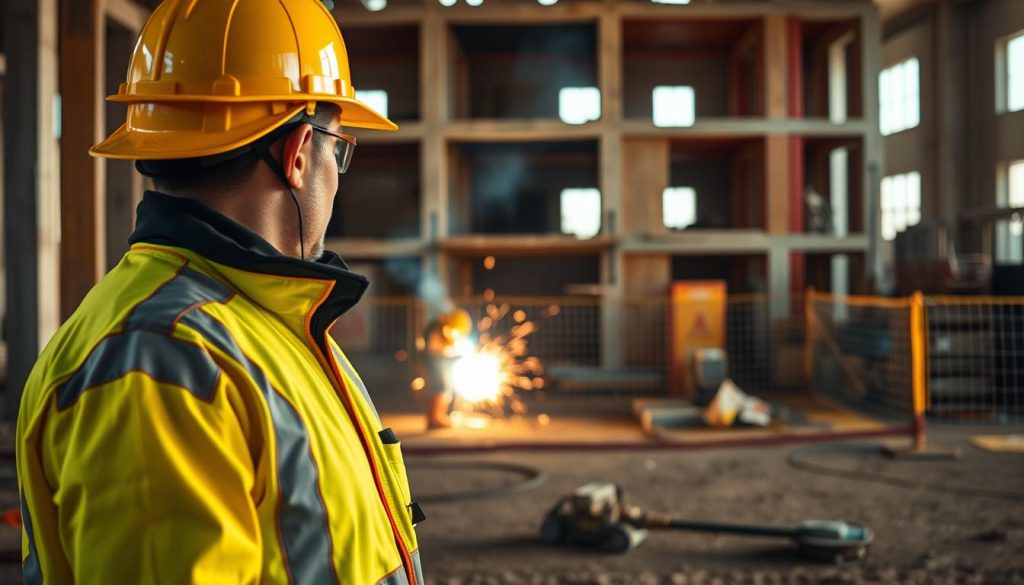
What does this role involve during active hot work? It means constant movement. The personnel must patrol the entire 35-foot hazard zone. They look for smoke, sparks, or unusual smells. Their duties require full attention—no multitasking is allowed.
Duties During Hot Work
Documentation is a key part of the job. Keeping a detailed log is not just paperwork. It creates a record of arc welding safety practices and any actions taken. This log is vital for accountability.
Knowing the site is another critical duty. Where are the fire extinguishers? Is the alarm pull station accessible? These personnel must ensure exits are clear and equipment is ready. If a small fire starts, their first job is to sound the alarm. Then, they can attempt to put it out if it’s safe to do so.
Their authority is absolute. If they see an unsafe condition, they can stop the hot work immediately. This power protects everyone. The watch continues even after the work stops. They remain for at least 30 minutes, looking for smoldering fires that might appear later.
| Primary Duty | Key Action | Why It Matters |
|---|---|---|
| Continuous Patrol | Walking the entire hazard zone | Catches hidden sparks and smoldering materials early |
| Equipment Readiness | Checking extinguishers and alarms | Ensures a fast, effective response to any emergency |
| Emergency Response | Sound alarm first, assess fire second | Prioritizes getting help and ensuring everyone’s safety |
| Post-Work Monitoring | Staying on site for 30-60 minutes | Prevents delayed ignition fires after everyone has left |
For a deeper understanding of these hazards, you can review this resource on hot work safety. The duties of the fire watch are your best defense against unexpected fires.
Understanding Permit Requirements for Hot Work
Think of a hot work permit as your official safety green light. It’s not just a piece of paper. This document proves that all safety requirements have been met before any sparks fly.
OSHA rules make this a must for many jobs. Activities like brazing, cutting, and welding need this formal approval. It’s a system designed to prevent accidents before they can start.
Who holds this key responsibility? It’s the Permit Authorizing Individual, or PAI. This person is chosen by management to be the safety gatekeeper. They can be a supervisor, a property owner, or a safety officer.
Important note: The person doing the work can never be the PAI. You need an independent set of eyes to verify the conditions.
Before issuing a permit, the PAI performs a crucial check. They look at the entire work area to ensure it’s safe. Their inspection includes several key points.
- Are all combustible materials moved or properly covered?
- Is a dedicated fire watch person assigned and ready?
- Are fire extinguishers in place and easy to reach?
- Have all other safety requirements been satisfied?
Once issued, the permit must be posted visibly at the site. How long is it good for? The PAI decides based on the job’s scope and the site’s conditions. They must also inspect the area every single day the permit is active.
If the conditions change or the permit expires, all hot work must stop immediately. This rule ensures safety is always the top priority, with no exceptions.
Guidelines for Fire Watch During System Downtime
When protection systems go offline, human vigilance becomes your first line of defense. Automatic safety equipment can fail for many reasons. Scheduled maintenance, broken pipes, or equipment issues can leave your building vulnerable.
What happens when these critical systems stop working? You can’t just hope nothing goes wrong. That’s where specific safety requirements come into play.
OSHA and NFPA Compliance
The rules are clear about system downtime. If your fire alarm or sprinkler system will be down for more than 4 hours in a 24-hour period, you must start a fire watch. This applies whether the outage is planned or unexpected.
Water-based protection systems get slightly more time. They can be impaired for up to 10 hours before mandatory coverage begins. But many local authorities require immediate action when sprinklers go down.
Why these specific time limits? They represent the threshold where risk becomes unacceptable without human monitoring. Your automatic protection is temporarily gone, so trained personnel become your temporary safety system.
Compliance means following specific standards. NFPA 25 covers sprinkler maintenance, while NFPA 101 addresses life safety during impairments. You must also notify your local fire department about any system outages.
Documentation is essential during this time. Keep detailed logs of when systems went down, when watch started, patrol rounds, and when protection was restored. This creates a clear safety record for your building.
Safety Measures and Use of Fire Extinguishers
What’s the one piece of equipment you hope you never need but must always have nearby? It’s your fire extinguisher. This tool is your first line of defense against a small fire.
Not all extinguishers are the same. You need the right type for the job. Welding can start different kinds of fires. You need an ABC-rated extinguisher.
Types of Fire Extinguishers
The rating tells you what it can fight. ‘A’ is for wood and paper. ‘B’ handles liquids like fuel. ‘C’ is for electrical fires. Your portable cart needs a 2-A:10-B:C model.
Your shop needs a bigger one. A 2-A:20-B:C rating is best for a fixed area. This equipment must be fully charged and ready for use.
Proper Placement and Readiness
Where you put your fire extinguishers matters most. They must be within 25 feet of the work area. Can you reach one in seconds?
More combustibles mean you need more extinguishers. Each safety watch person should have their own. They cannot share this vital equipment.
Check your extinguisher before you start work. Is the pin in place? Is the gauge in the green? A quick check ensures it works when you need it.
| Extinguisher Rating | Best Location | Fire Types It Fights |
|---|---|---|
| 2-A:10-B:C | Portable Welding Carts | Wood, Liquids, Electrical |
| 2-A:20-B:C | Fixed Shop Areas | Larger versions of the same fires |
Remember the PASS method for use. Pull the pin. Aim low at the base. Squeeze the handle. Sweep from side to side. Your safety depends on knowing this.
Training and Certification for Fire Watch Personnel
The true strength of any safety program lies in the quality of its personnel training. You cannot simply point to someone and tell them to keep a lookout. Proper preparation turns a task into a lifesaving skill.
What does this essential training cover? It goes far beyond just watching for flames. Personnel learn to recognize early warning signs. They practice identifying smoke and smoldering materials before a blaze erupts.
Essential Safety and Equipment Training
Hands-on experience is non-negotiable. Team members need to physically operate fire extinguishers. This builds the confidence needed during a real emergency.
They must also know the building’s emergency plan inside and out. Where are the alarms? What is the evacuation route? This knowledge must be second nature.
A strong program includes understanding site-specific equipment and hazards. Certification proves that personnel have mastered these critical duties. It shows they are ready for the responsibility of a fire watch.
Management holds the key to this process. They must provide thorough, ongoing training. This commitment ensures every fire watch is conducted by capable, certified professionals.
Reviewing NFPA and OSHA Standards in Hot Work
Have you ever wondered why some safety rules seem so specific? They are often written in response to real incidents. Understanding these standards is not just about compliance; it’s about learning from the past to protect your future.
Two main bodies set the requirements for hot work like welding and cutting. OSHA provides the legal minimums. NFPA often suggests best practices for fire safety in arc welding that go further.
Key Regulations Affecting Arc Welding
OSHA’s rules are found in 29 CFR 1910 Subpart Q. This standard spells out when you need a fire watch. It’s required if sparks could ignite materials within 35 feet.
NFPA 51B focuses entirely on fire prevention during hot work. It sets a higher bar for post-work monitoring. Why the difference? NFPA standards build in an extra safety margin.
So, which rule do you follow? You must always comply with the most restrictive requirements. If OSHA says 30 minutes but NFPA says 60, you follow the 60-minute rule.
| Governing Body | Key Standard | Post-Work Monitoring Requirements | Primary Focus |
|---|---|---|---|
| OSHA | 29 CFR 1910 Subpart Q | At least 30 minutes | Legal minimum safety protection |
| NFPA | NFPA 51B | Minimum 60 minutes | Industry best practices for hot work |
Local fire marshals can also impose stricter requirements. Your final work plan must meet all applicable standards. This layered approach ensures maximum protection for everyone involved in welding and cutting operations.
Integrating Fire Watch Into Overall Job Safety Protocols
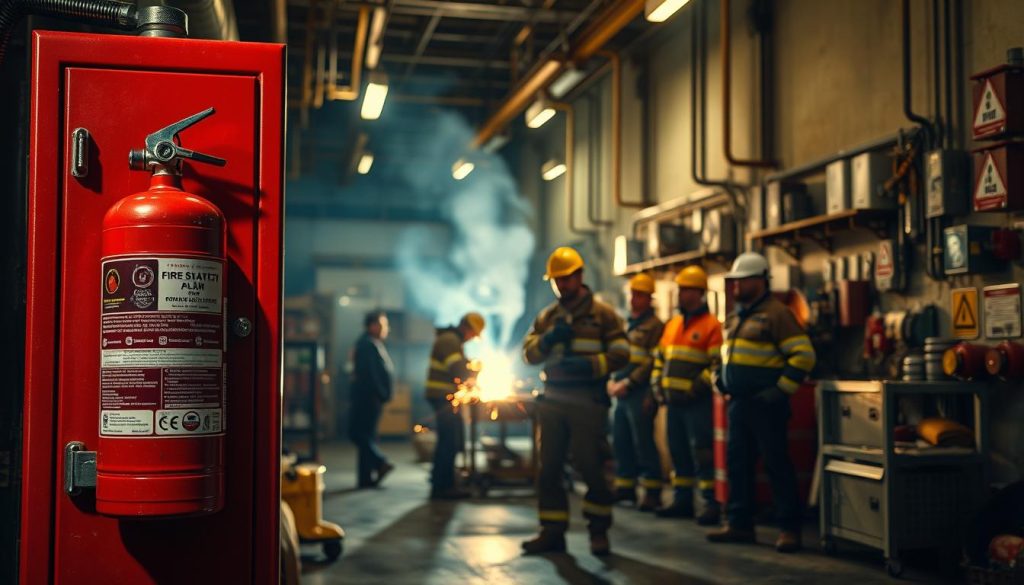
Safety is a team effort, not a single task. Your fire watch program should connect with all other safety measures. This creates a complete shield against danger.
Think of it like a puzzle. Each piece must fit perfectly. Your hazard assessment, equipment checks, and emergency plans all work together.
Coordinating Fire Watch with Safety Training
Everyone on site needs to understand the why behind the watch. Training makes this clear. It shows how this role fits with other protections.
Team members learn to spot risks together. They practice communication and quick action. This coordination turns rules into real safety habits.
Monitoring Procedures During and After Work
The watch doesn’t stop when the tools cool down. This is when hidden dangers can appear. Smoldering spots might take time to ignite.
How long should you keep watching? Standards vary. Smart teams often extend monitoring based on their specific site conditions and materials present.
Implementing Fire Watch Procedures During Arc Welding
| Monitoring Phase | Key Activities | Duration Guidelines |
|---|---|---|
| During Hot Work | Continuous patrols, barrier checks, equipment verification | Entire operation period |
| Immediately After Completion | Intensive area scanning for smoldering materials | First 30 minutes critical |
| Extended Post-Work | Periodic checks, final walkthrough verification | 30-60 minutes minimum |
Barriers like red danger tape protect everyone on site. They keep people away from sparks and heat. Documentation creates a safety record for each job.
For more details on building a complete safety system, see this resource on comprehensive fire protection programs. Your final walkthrough ensures the area is truly safe before leaving.
Conclusion
Building a strong safety culture around hot work isn’t just about following rules—it’s about creating a mindset where protection comes first, every single time. The steps we’ve discussed, from area preparation to post-task monitoring, form a powerful shield. They are based on real-world experience, not guesswork.
Why do these procedures matter so much? Because the small investment in a dedicated fire watch and thorough planning is tiny compared to the potential cost of a single incident. It’s about protecting people and property, plain and simple.
Make these habits automatic. For expert mobile welding services in Gilbert, AZ, with complete safety compliance, contact Xpress Mobile Welding Phoenix at (623) 263-0277. We are located at 922 N Colorado St and implement proper fire watch on every job.
FAQ
What is the main purpose of a fire watch during welding or cutting?
The main purpose is to prevent fires. A fire watch person looks for sparks and heat. They watch for flames and smoke. They are ready to use fire extinguishers if needed. Their job is to keep the work area and nearby property safe from ignition hazards.
How far should combustible materials be moved from a hot work area?
You should move all combustible materials at least 35 feet away. This includes things like wood, paper, and flammable liquids. If you cannot move them, you must protect them with fire-retardant covers or shields. This helps stop fires from starting.
What are the key duties of fire watch personnel?
Their duties include watching the entire hot work area for sparks. They must have fire extinguishers ready. They need to monitor hidden spaces for smoke. They must stay alert during the work and for at least 30 minutes after completion. Their goal is to catch any fire hazard quickly.
When is a hot work permit required?
A hot work permit is usually required for any temporary operation that creates a spark, flame, or heat. This includes arc welding, cutting, and grinding. The permit ensures a manager checks the area for safety first. It is a key part of a fire prevention program on a construction site.
What type of fire extinguisher is best for welding fires?
A multi-purpose ABC dry chemical extinguisher is often best. It can put out fires from wood, paper, flammable liquids, and electrical equipment. It’s important to have the right type nearby and to make sure personnel are trained on how to use it properly.
How long should the fire watch continue after the hot work is done?
The fire watch must continue for a minimum of 30 minutes after all work has stopped. This is because heat can smolder in hidden areas and start a fire later. The watch person must check for any signs of heat, smoke, or flame before leaving the area.
What training does a fire watch person need?
They need training on how to sound a fire alarm. They must know how to use fire extinguishers. They should understand the specific hazards of the job site. Training also covers what to do if a fire starts. This knowledge is essential for keeping everyone safe.